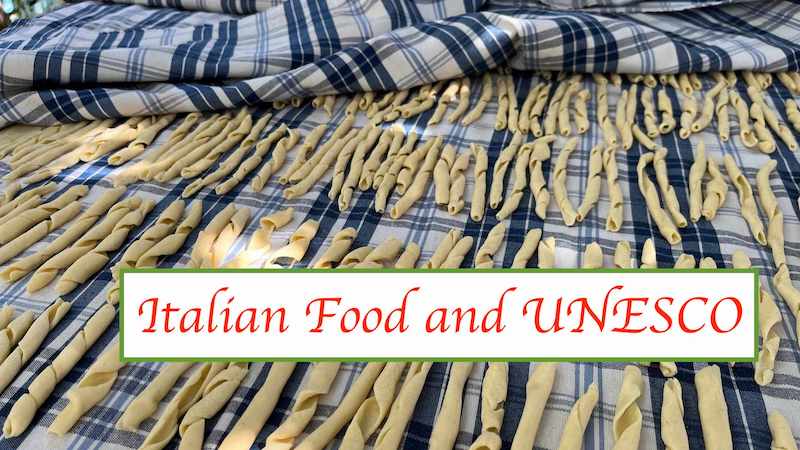
Who doesn’t love Italian food? We savor both the wonderful flavors and the healthy-choice benefits of the Mediterranean diet. For many, it’s associated with memories of good times and the savoring of dishes in a convivial atmosphere amongst family and friends. It’s a win-win. Recently, UNESCO honored the cuisine by recognizing its importance for the world’s cultural heritage. While Italian food is a broad category, the acknowledgement focuses on the local level, a general principal that plays out from the smallest of villages to regions and the nation.
UNESCO CULTURAL HERITAGE
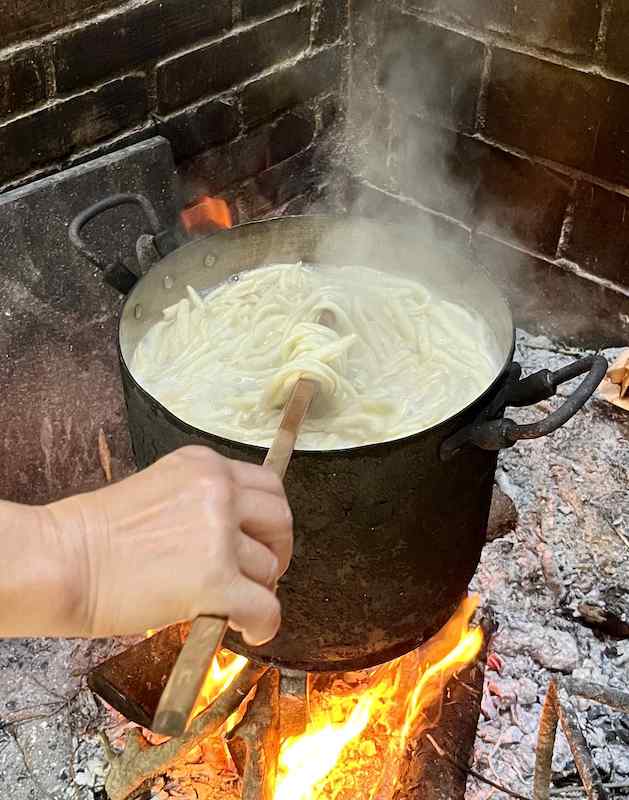
Boiling homemade pasta in an open fireplace
To set the scene, the United Nations Educational, Scientific and Cultural Organization (UNESCO) has placed Italian food in their category of “intangible cultural heritage,” defined as “the practices, knowledge, and expressions that communities recognize as part of their cultural identity, along with associated objects and spaces.” This heritage isn’t stagnant but adjusts and changes over time. By acknowledging these traditions, UNESCO aims to preserve such cultural expression for the future.
With that goal, UNESCO characterizes Italian cooking as sustainable and bio-culturally diverse. Locally sourced raw ingredients, traditional preparation, anti-waste recipes and multi-generational participation highlight a food culture that has been passed down through the ages and is an intricate part of daily life, whether shared around a family table or amongst the larger community.
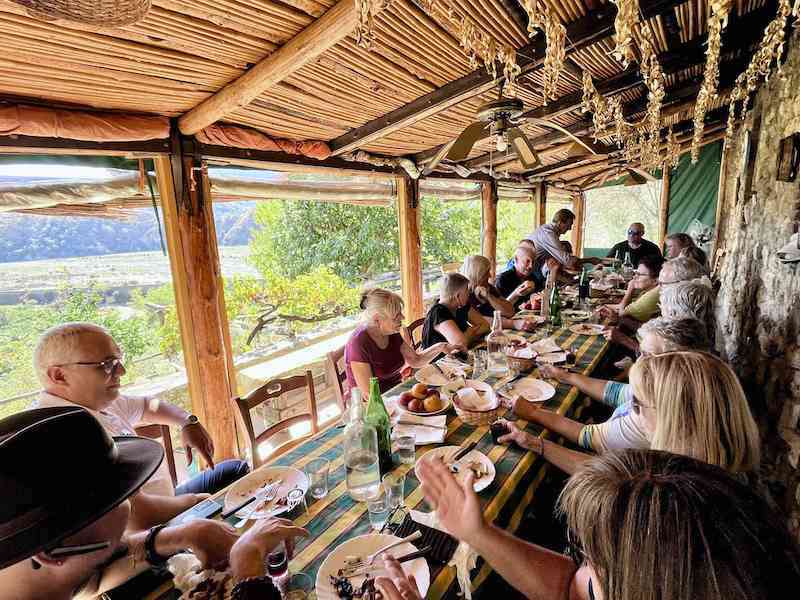
Convivial alfresco dining in Southern Italy
Interestingly, even though the Italian peninsula is made up of a vastly diverse group of peoples, with one of the most varied linguistic heritages in Europe, their approach to food is similar, despite the range of ingredients and climates from region to region and village to village. The connection to the land and its traditions are of utmost importance.
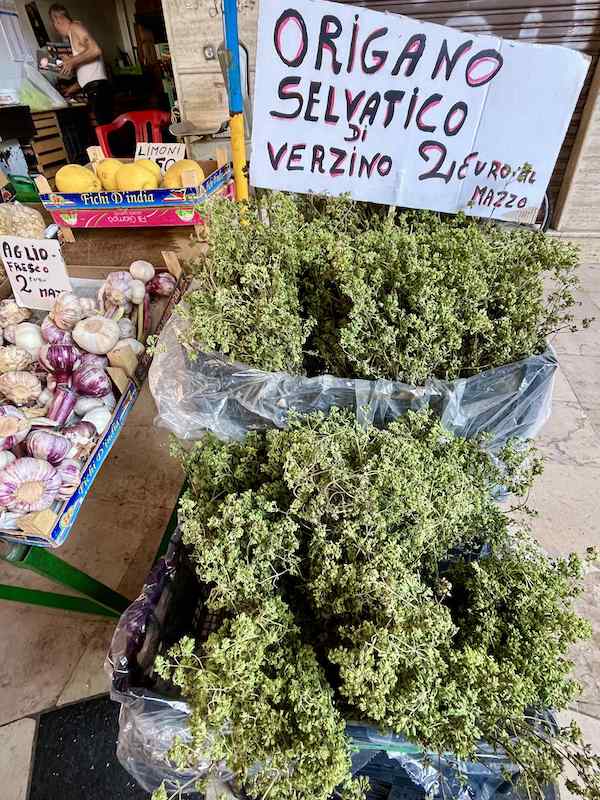
Wild oregano from Verzino for sale in a Calabrian market
ITALIAN FOOD TO NON-ITALIANS
In the United States, we enjoy many dishes that fall under the umbrella of Italian food. However, we’re often savoring specialties from different areas of the country, whether it be cotoletta milanese (Milan’s breaded veal chop), tortellini in brodo (ring-shaped stuffed pasta in broth from the Emilia-Romagna region), bucatini all’amatriciana (long tube pasta with a sauce from its namesake of Amatrice in Lazio), arancini siciliani (stuffed and fried rice balls from Sicily) or one of the many polenta dishes originating from the north. The outsider’s view of Italian food tends to be more a global perspective of a national cuisine, as historically, it wasn’t common to find dishes from diverse regions on a menu in Italy.
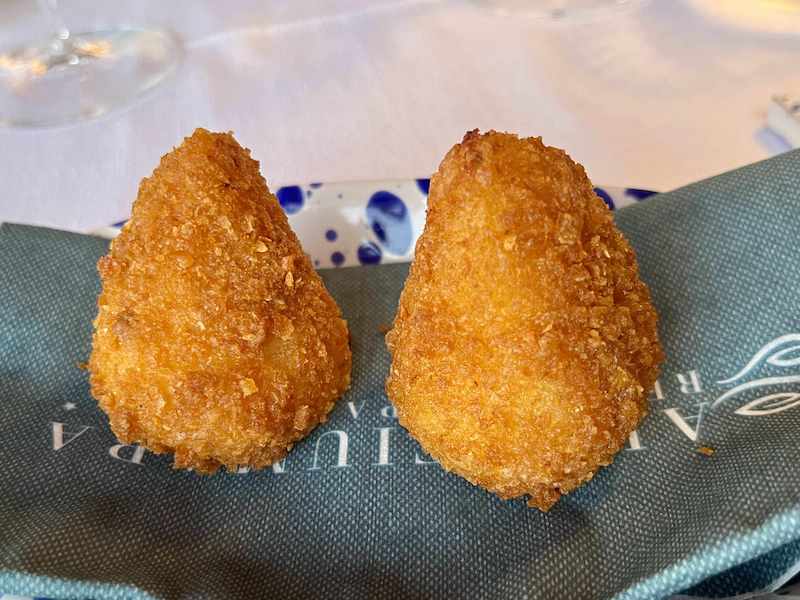
A pair of delicate arancini enjoyed in a restaurant in Calabria overlooking the Strait of Messina
Popular food, such as the Neapolitan pizza is now universal. Restauranteurs in tourist areas offer menus with well-known Italian recipes from all over the country. Interestingly, some beloved dishes first appeared outside Italy, such as spaghetti alla bolognese (a ragù meat sauce), savored from New York to Sydney. The good people of Bologna have confirmed that no such name exists and that their traditional countryside ragù usually sauces tagliatelle. Such a detail may seem insignificant looking in from the outside, but not for those defending a tradition. As it turns out, the “Bolognese” is so admired that some entrepreneurial bolognesi (people from Bologna) put the name on menus to attract diners. Incidentally, if you’re craving a slice of bologna when in the bel paese, best to ask for mortadella.
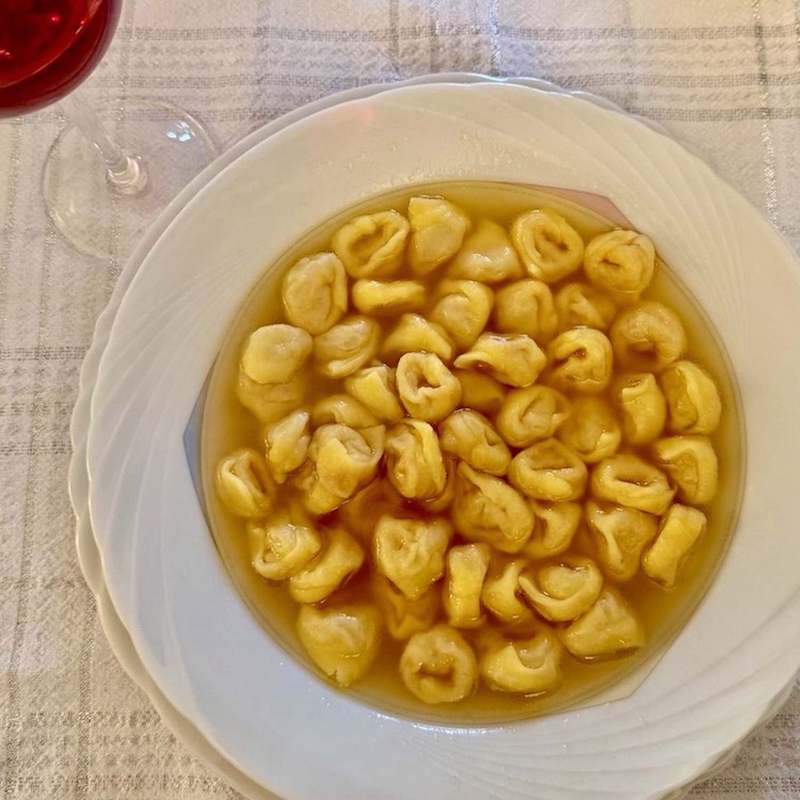
Tortellini in brodo, one of Bologna’s many classic dishes
Of course, UNESCO acknowledges food and traditions being constantly in flux. When Italians immigrated to the United States, many traditions adapted to become Italian-American food, a category that may one day be recognized by UNESCO. Think chicken parmesan, Italian vinaigrette and Sunday gravy. Wherever Italians have gone, they’ve brought their food with them. Interestingly, Italian blogger Ishita Sood with the handle “Italophilia” tells fascinating anecdotes of Italian-Indian food on her podcast!
ITALIAN FOOD FOR ITALIANS
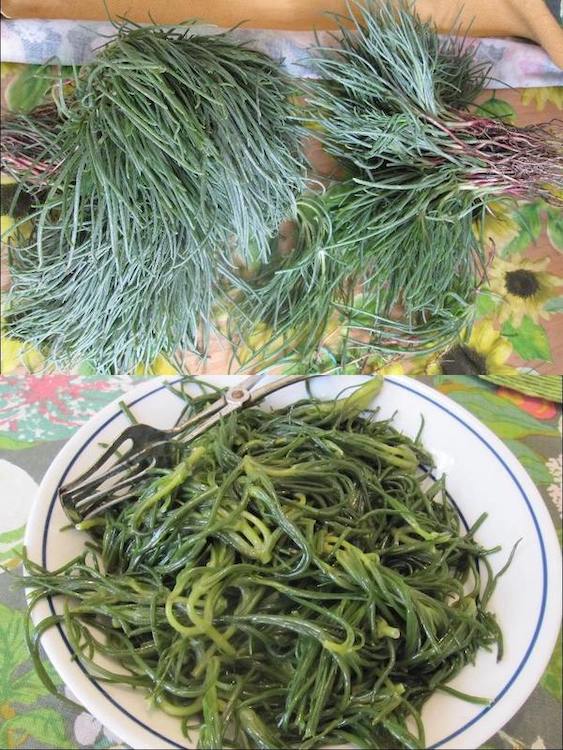
Agretti or barba di frate, soda inermis or saltwort in English – example of a plant consumed in central and northern Italy, the tenderest leaves can be eaten in a salad, but it is more commonly boiled and sauteed, pickled or incorporated into other dishes, such as a savory pie.
With traditional Italian cooking, every ingredient matters. The components aren’t generic: balsamic vinegar from Modena, Genoese basil, red onions from Tropea, etc. Likewise, you can’t just throw some chopped onions or garlic not on the ingredient list into a traditional recipe. When you change an ingredient, you change the recipe.
You could spend a lifetime scrolling through comment discussions of traditional recipes on Italian websites. For example, the debate as to the authentic or definitive preparation of pasta alla carbonara (with egg, guanciale, pecorino and pepper) is quite heated, no joke intended. Although generally considered Roman, the discourse gets rather complicated with creation hypotheses ranging from simply being a classic of the Eternal City to the hands of the carbonai of Abruzzo, but the serious argument comes when they get down to the particulars of ingredients and their exact preparation. This is not to say that Italians aren’t creative, but tradition is tradition.
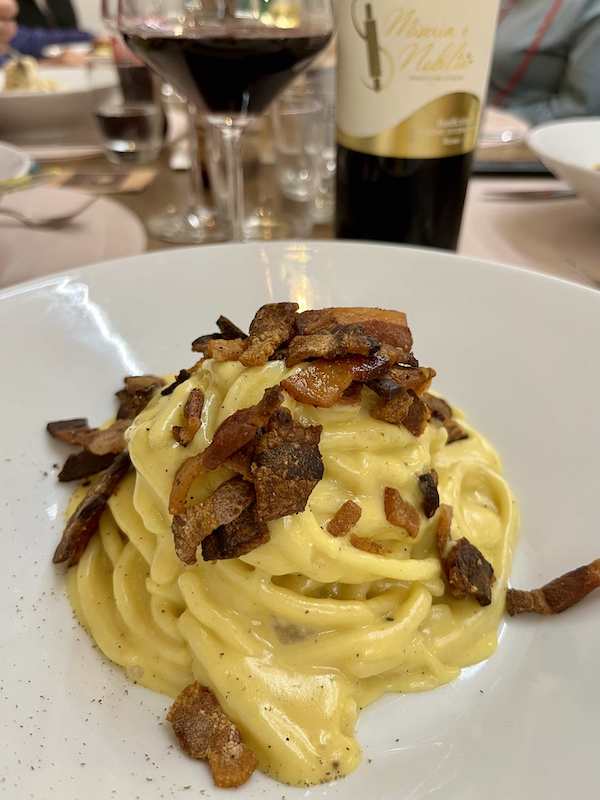
A spaghetti alla carbonara in Basilicata, prepared with artisanal pasta, crispy Lucanian guanciale, egg yolks, pecorino lucano, Grana Padano aged 36 months and toasted black pepper
ITALIAN CULINARY TRADITION AND CREATIVITY
The UNESCO recognition focuses on the Italian culinary concept and historical practices passed down through generations, dishes that grew from the agricultural offerings on hand, time-honored preparation methods, and the transmission of history and lore tied to the cuisine.
Creativity has always been important for the Italian palate. Thinking of cheese alone, Italy has the largest number of traditional varieties in the world – over 2,500! Italy also has the greatest variety of indigenous grapevines. It is only logical that the vast range of agricultural products featured in the cuisine stem from the country with the largest biodiversity in Europe.
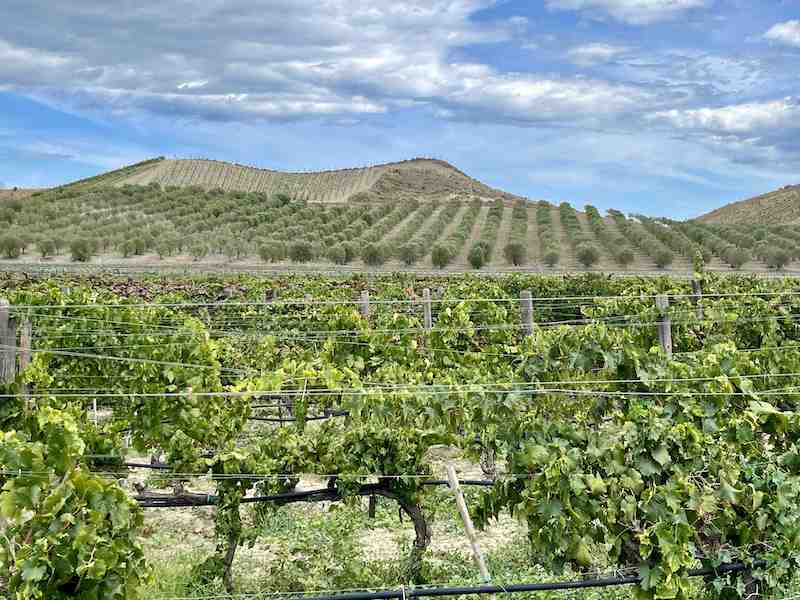
Vineyard and olive orchard in Southern Italy
These raw ingredients serve as the inspiration. They are celebrated from an intimate family table to village and town festivals, often referred to as a sagra when food’s involved, with many Sagre del pesce (Festivals of fish) or dei funghi porcini (mushroom), for example. Some festivals have reached national and international levels, with highly creative recipes featuring traditional ingredients, such as at the Scirubetta Festival, which attracts serious gelato makers, and the Peperoncino Festival that explores the peperoncino calabrese, the region’s spicy chili.
THE FUTURE OF ITALIAN FOOD
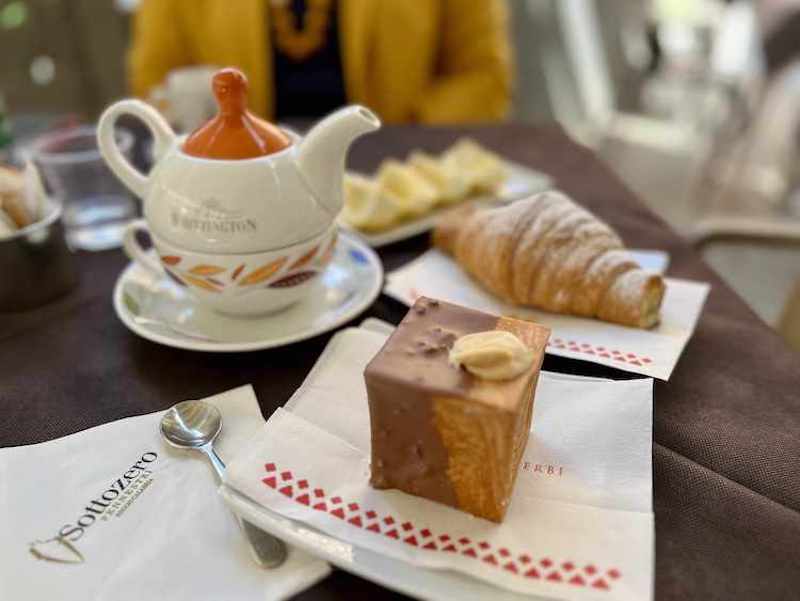
The “crubik,” a newfangled cornetto or croissant from Torino
Tradition and experimentation continue, although it can be difficult with the bombardment of less expensive, mass-produced, non-Italian products on the shelves of chain supermarkets all over Italy. City dwellers without access to a backyard garden face challenges of finding local ingredients within a budget.
Sound-bite promotion also puts traditional cuisine at risk. A major news source or popular TikToker posts a photo of what they describe as the best or the quintessential dish of a place and a stampede ensues to the exclusion of every other worthy offering. Eventually, the cuisine risks becoming a caricature of itself, with a handful of dishes being consumed the length of the peninsula.
Globalization tends to squeeze out the local level. How can all the food on the shelves of Italian food superstores really be “artisanal,” as touted? An international sameness has arrived even to remoter locations with big brand labels. Identical smears and dots of celebrity chefs and their imitators pop up in unexpected places, where cooks hope to satisfy the foodie phenomenon. Italy isn’t immune. The family trattoria that has traditionally served a delicious ensemble of ingredients unfolding naturally on a plate becomes harder to find amongst fussier presentations in which the image of an ingredient stack in the center of an oversized dish seems more important than its flavor.
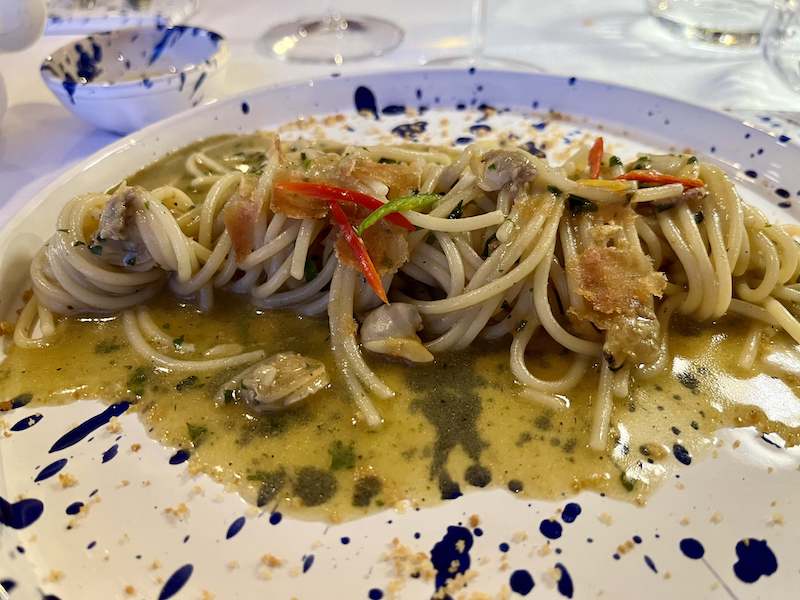
Example of an excellent seafood pasta, local ingredients with a contemporary flair
WHAT IS ITALIAN FOOD?
On more than one occasion, I’ve had people contact me asking whether the food on my tours was local. As I focus on Calabria and Basilicata, in areas that are considered way off the beaten path, we eat in many small, family-owned establishments that source their ingredients literally from the neighborhood or their own farm, often organic. I hadn’t thought to write “local food” in my materials as we were eating in the manner that the UNESCO organization celebrates. Further, we don’t drink generically Italian wine, we drink Calabrian or Lucanian (from Basilicata) wine.
I’ve also had several guests on a Calabria tour ask, “Is this pecorino romano?” The question confused me at first. Why would we be eating sheep’s cheese all the way from Rome when there’s excellent pecorino calabrese? If you go to the grocery store in the area, there will be cheese and cold cuts from all over Italy, but not on the table of an agriturismo (agricultural tourism) in the Sila Mountains.
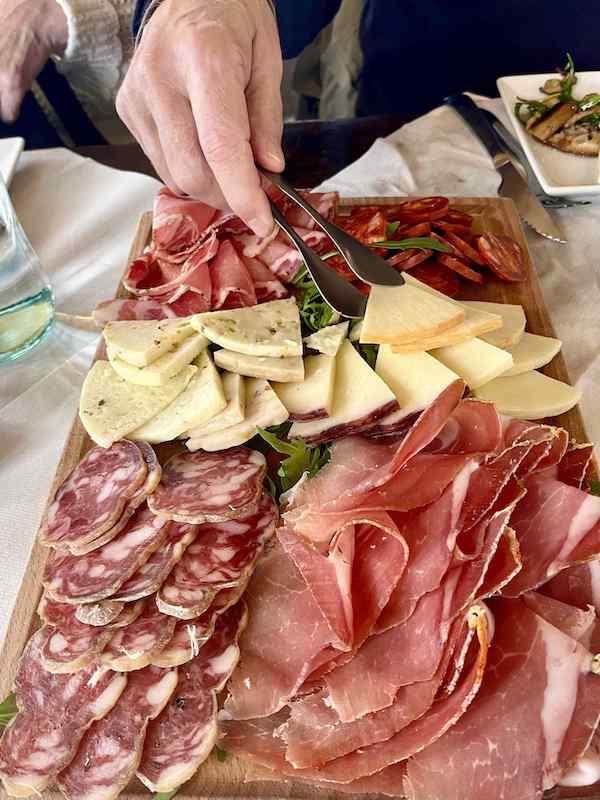
Cured meat and cheese board in Calabria
Of course, relatively speaking, Rome isn’t that far, but it isn’t local. Likewise, many tourists clamor for an Aperol Spritz, a pleasantly refreshing drink that is also popular with Italians, but outside Padua or Canale d’Alba, where there’s apparently the largest production plant, it isn’t local. And where are the ingredients sourced? This is the point.
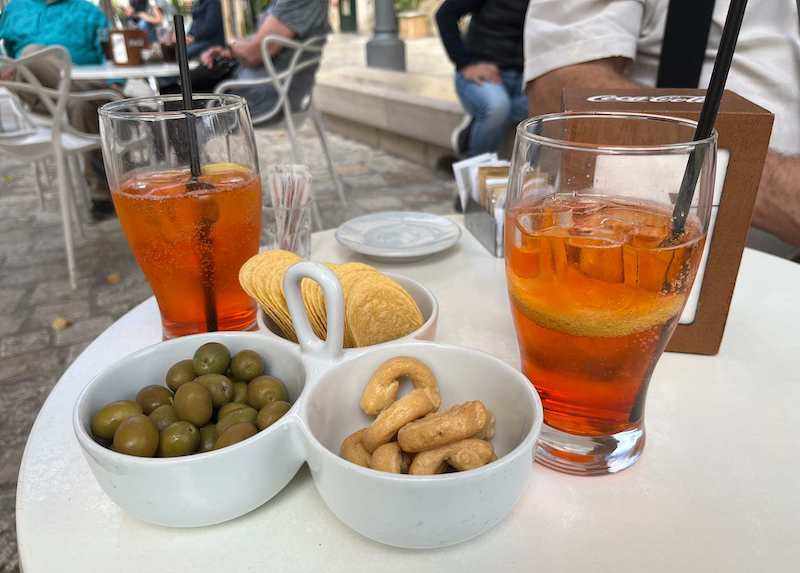
Aperol Spritz with generic appetizers – you might enjoy the scenery better in Italy, but you can obtain and consume this aperitivo anywhere…
Of late, I have seen ‘nduja on restaurant menus and food labels all over the United States. The spreadable salami originally from the Calabrian village of Spilinga has conquered the world in just a handful of years. However, whenever I’ve had it outside a certain distance from the source, it just isn’t the same thing. It’s more of an homage. And perhaps this speaks to the true meaning of UNESCO’s recognition of Italian food. It’s on the list of intangible cultural heritage, unable to be grasped by an influencer.
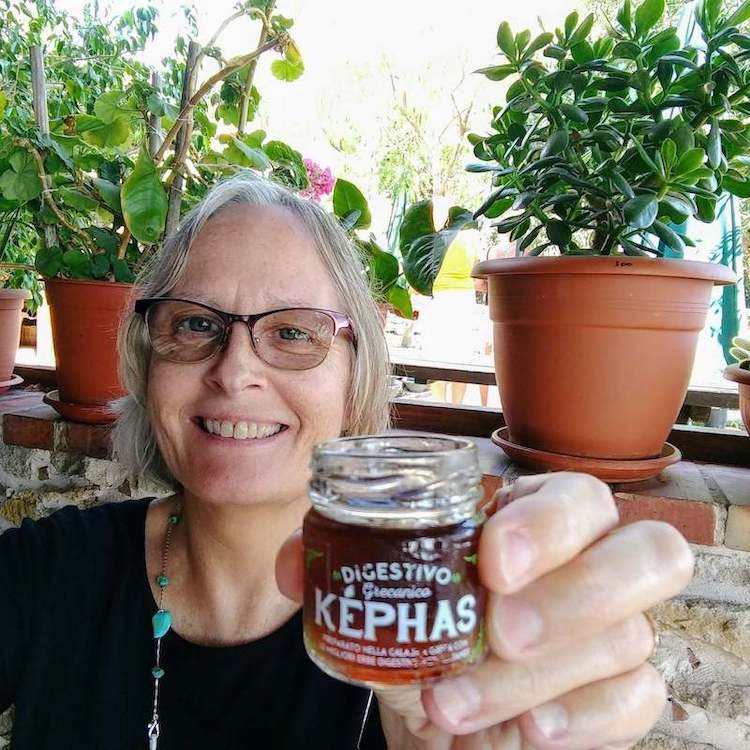
Author Karen Haid enjoying Kèphas, an artisanal amaro from the Greek area of Calabria
Enjoy “local” Italian food on one of my small-group Calabria Tours (I have three itineraries) or on my Basilicata Tour of Calabria’s northern neighbor.
Read about the fascinating Calabrian region in my book Calabria: The Other Italy, described by Publisher’s Weekly as “an intoxicating blend of humor, joy, and reverence for this area in Italy’s deep south,” and explore Calabria’s northern neighbor in my book Basilicata: Authentic Italy, “recommended to readers who appreciate all things Italian” by the Library Journal.
Follow me on social media: Basilicata Facebook page, Calabria: The Other Italy’s Facebook page, Karen’s Instagram and Karen’s Twitter for beautiful pictures and information.
Sign up below to receive the next blog post directly to your email for free.
Comments 10
My mouth is watering just thinking about the delicious food we had on your tour!
Author
Always pleased to hear it!
I live in Vermont and a local farmer at the Farmer’s Market in our small town grows Tropea onions. I was so surprised to see these since they are so unmistakable. When I screamed at him “Tropea” he was taken back that I knew what they were.
Italy is recognized by UNESCO for its food, while the 40 vehicle caravan that wheeled the American vice-president around the narrow streets to the Olympic games reputedly brought their own food. Go figure!
Author
That’s a shame.
Hello, Karen, from freezing NYC. Thanks for helping me remember our fabulous Calabrian tour and the most amazing food. The pasta making class was such FUN!
Author
Buongiorno! Glad you have such pleasant memories to keep you warm!
Great post Karen! Hopefully this designation helps differentiate Italian food and products from ‘Italian sounding’ ones. The ‘a Km zero’ localness and fresh ingredients are a big part of it. So is using our blogs and other writing to educate. Ciao, Cristina
Author
Absolutely, a national recognition to highlight the farm-to-table culture. Thanks for your comment and for all of your educational blogposts, as well!
Wonderful article. As a registered dietitian & clinical nutritionist it’s nice to see Italian food & family meals recognized in this way.
Author
Thank you. Yes, the cultural identity is highlighted by the familial-communal aspect, and the nutritional benefits and great taste put Italian food over the top!