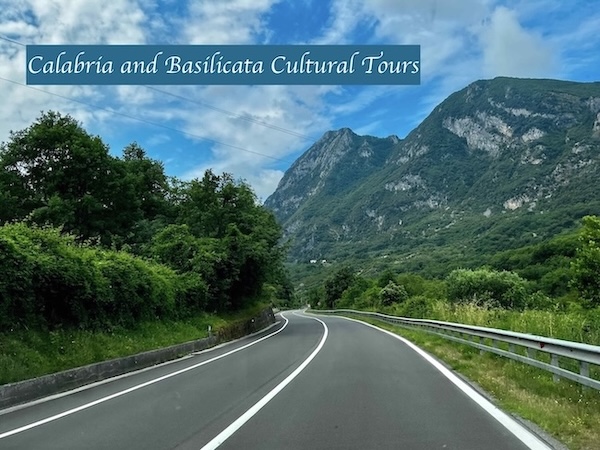
I get numerous messages from would-be travelers saying that they would like to sign up for a tour, not specifying which itinerary. Sometimes they mention Calabria or Basilicata. At other times, they inquire about my cultural tour. Even though I focus on two lesser-known Italian regions, I have four different itineraries, which surprises people. Three showcase the beauty and diversity of Calabria, and one explores Basilicata, Calabria’s fascinating northern neighbor. For those who would like to explore both regions, my fall Calabria and Basilicata Cultural Tours have just a couple days between them, great for doing them back-to-back.
VISITING CALABRIA AND BASILICATA
Tour participants usually sign up for a single itinerary in Calabria or Basilicata. Many enjoy these small-group experiences so much that they return to see the other region a year or so later. A few guests, however, have taken the opportunity to visit both these Southern Italian regions with Karen’s Travel LLC on the same trip. Put together, my Calabria and Basilicata Cultural Tours run from the end of September to mid-October.
I’d like to share a few highlights from these two tours this past fall to give travelers, both active as well as those interested from an armchair perspective, a better idea of the itineraries. If you follow my Facebook and/or Instagram pages, you may recognize photos that I posted during the tours, as these images are screenshots from my Calabria: The Other Italy Facebook and Basilicata: Authentic Italy Facebook pages. (Just a sampling – the numbers on the last picture of each group originally clicked through to more photos.)
CALABRIA CULTURAL TOUR
My small-group Calabria tours start in Lamezia Terme, which has the region’s largest airport and is on the principal north-south train line. From this spot at the center of Calabria, we travel north to Cosenza, where we stay for four nights. We had the possibility to visit the Sanctuary of St. Francis of Paola on the way as everyone arrived in good time with their luggage and we were able to enjoy this extra stop. In the afternoon, we had a guided visit of the old town, where we also dined in a traditional trattoria with local specialties such as lagana e ceci, the pasta dish with chickpeas in the photo.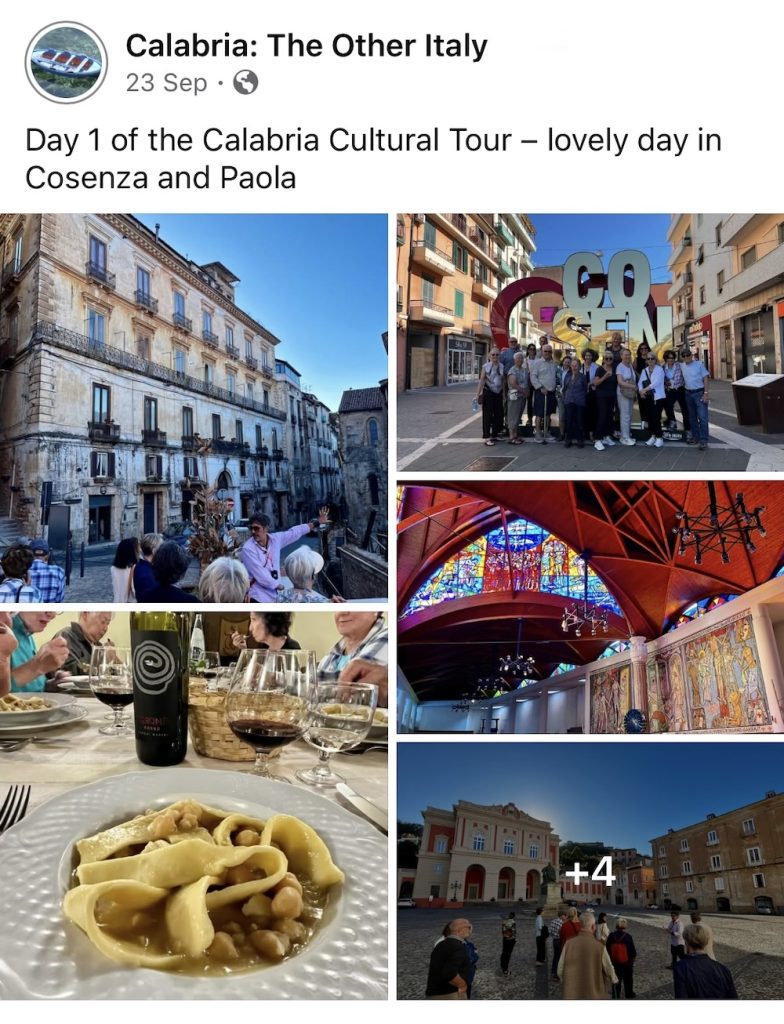
On our second day, we had a pleasant excursion to Rossano, which is known for its licorice production. In the morning, we learned how licorice is extracted from the roots of the plant at the Amarelli factory and museum, where we were able to sample various products made on premises. We also visited the old town, up on a hill overlooking the Ionian Sea, home to an ancient, illuminated manuscript of great historical and cultural value. Lunch was served homestyle, comfort food that reminded many with Calabrian roots of their nonna’s cooking.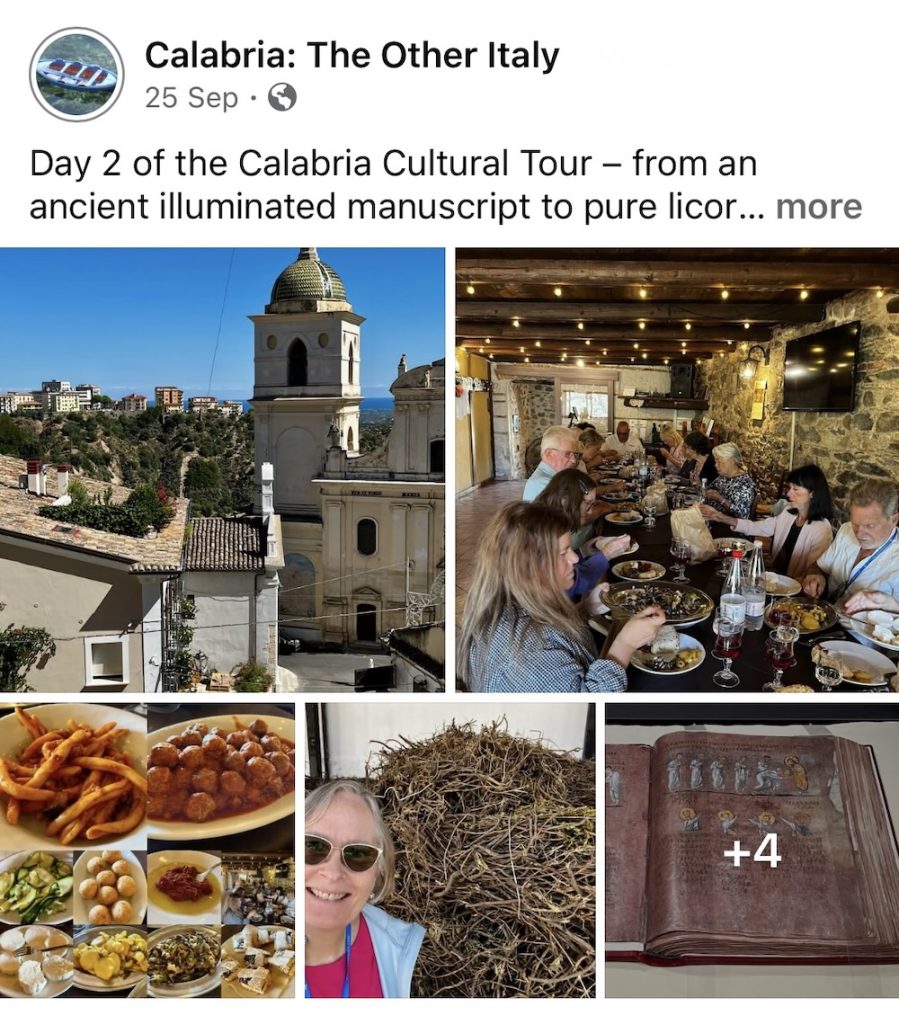
We visited the Sila Mountains on the third day, took a forest walk with a naturalist and enjoyed a spectacular lunch that featured local mushrooms, truffles, potatoes, greens and beef. A guided tour of Santa Severina, one of the Borghi più belli d’Italia, Italy’s Most Beautiful Villages, completed the excursion.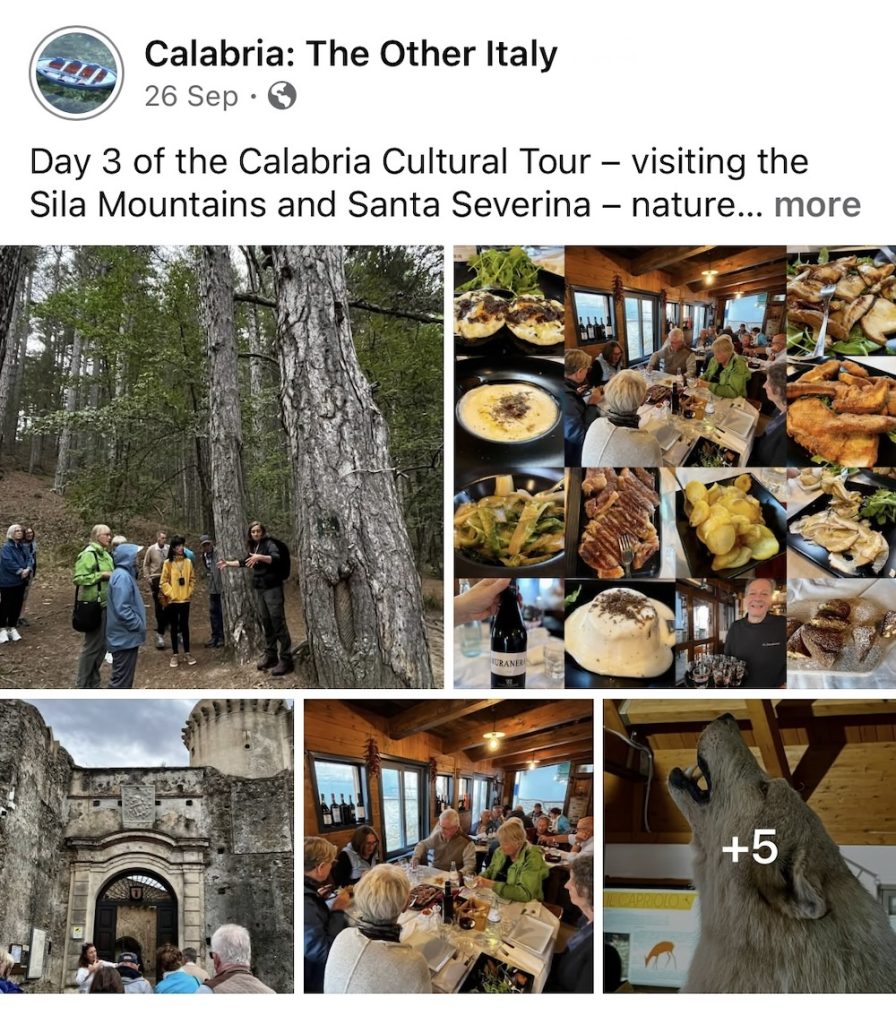
The Pollino Mountains were the highlight of the next day with another of the Borghi più belli d’Italia. Civita has longstanding Albanian roots, which we learned about with a stroll through the town, at the ethnographic museum and by way of a delicious lunch of the village’s traditional dishes. In the evening, we sampled Donnici DOC wine at a Cosenza area winery. My Calabria tours feature exclusively Calabrian wines and it’s always rewarding to go deeper and get personal stories and perspectives in a visit to a family winery.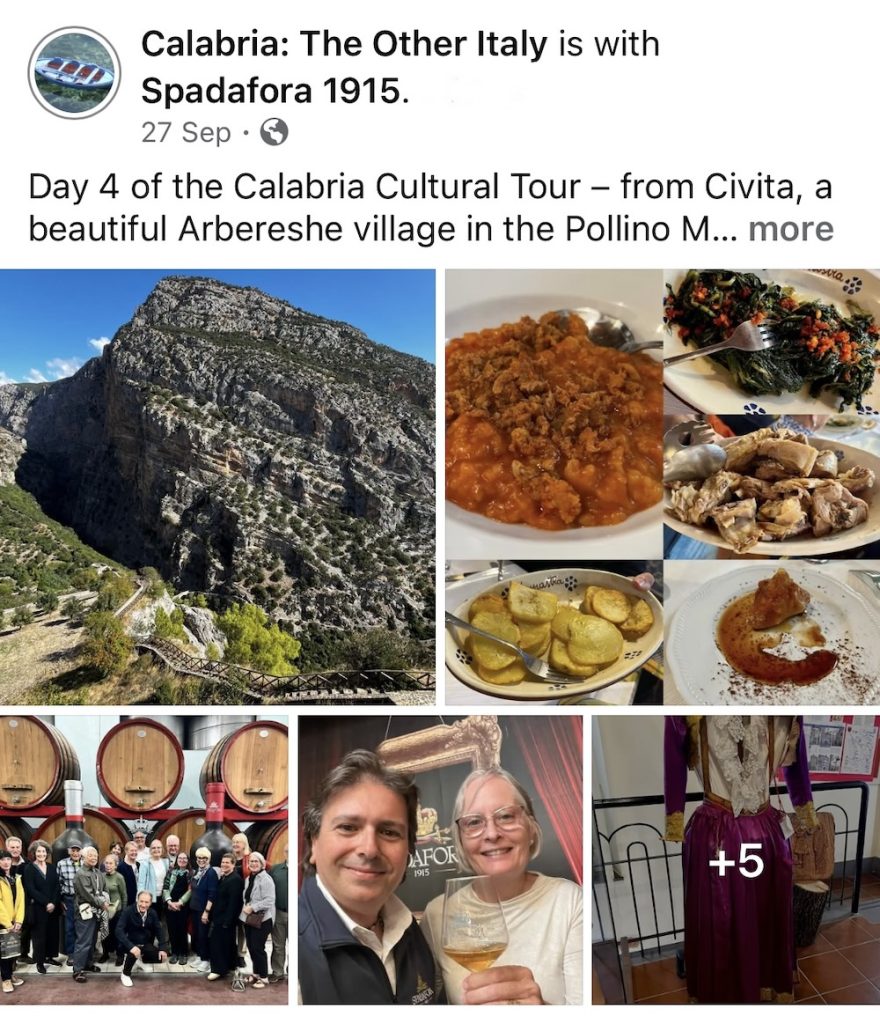
On the fifth day, we drove from Cosenza to Reggio Calabria with stops at the ceramic museum in Seminara and lunch (see the swordfish and swordfish balls below) in beautiful Scilla, another of the Borghi più belli d’Italia. After checking into our hotel, we visited Reggio’s archeological museum with the world-famous Bronzi di Riace, ancient Greek statues.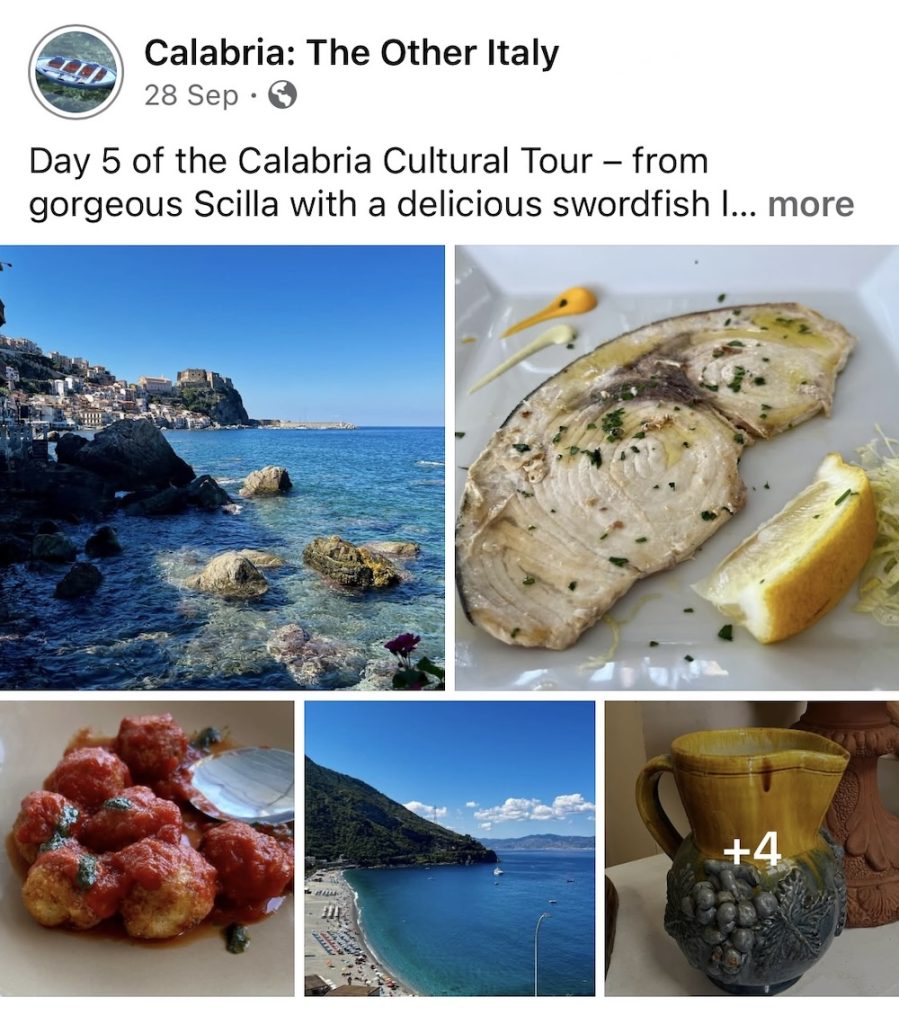
The following day, we immersed ourselves in the gorgeous views of the Strait of Messina and the excellent shopping of Calabria’s largest city.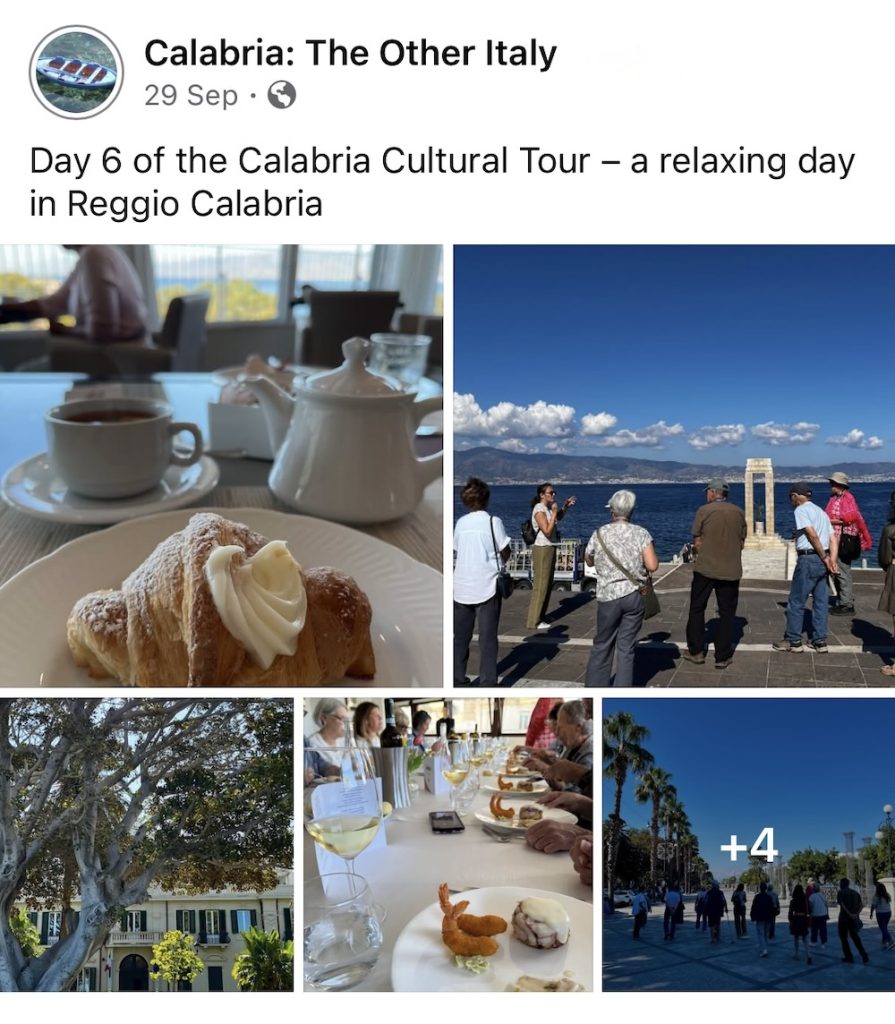
We visited another of the Borghi più belli d’Italia on the next day. Bova is perched on the edge of the Aspromonte Mountains and is the center of the region’s Greek area. Our lunch was nearer the sea, a delicious farm-to-table feast, enjoyed al fresco overlooking a bergamot grove.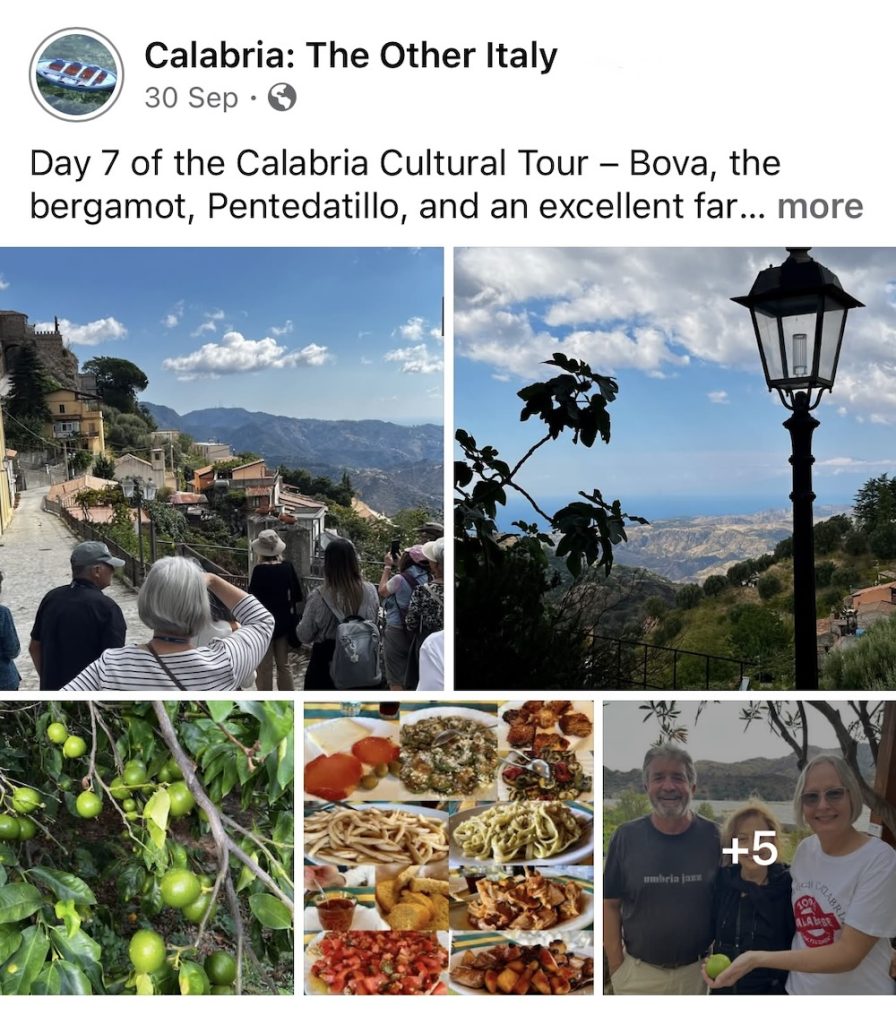
From ancient to medieval history on day 8 with the Roman baths of Casignana and another of the Borghi più belli d’Italia with the village of Gerace and an excellent farm-to-table meal in the countryside. In the evening we continued to our third hotel in the Province of Vibo Valentia.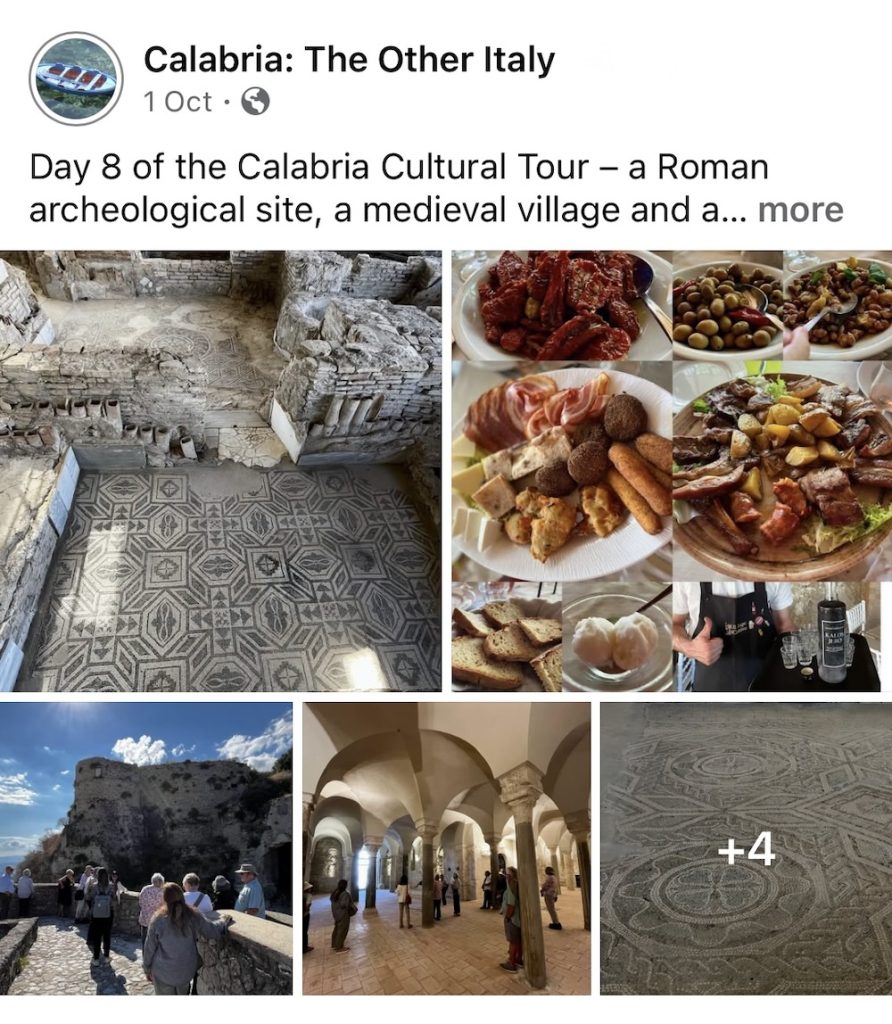
On the ninth day, we explored Pizzo with its castle, Napoleonic history of Joachim Murat and quirky Piedigrotta Church in a seaside cave. Our afternoon excursion took us to the mountains and charterhouse of Serra San Bruno.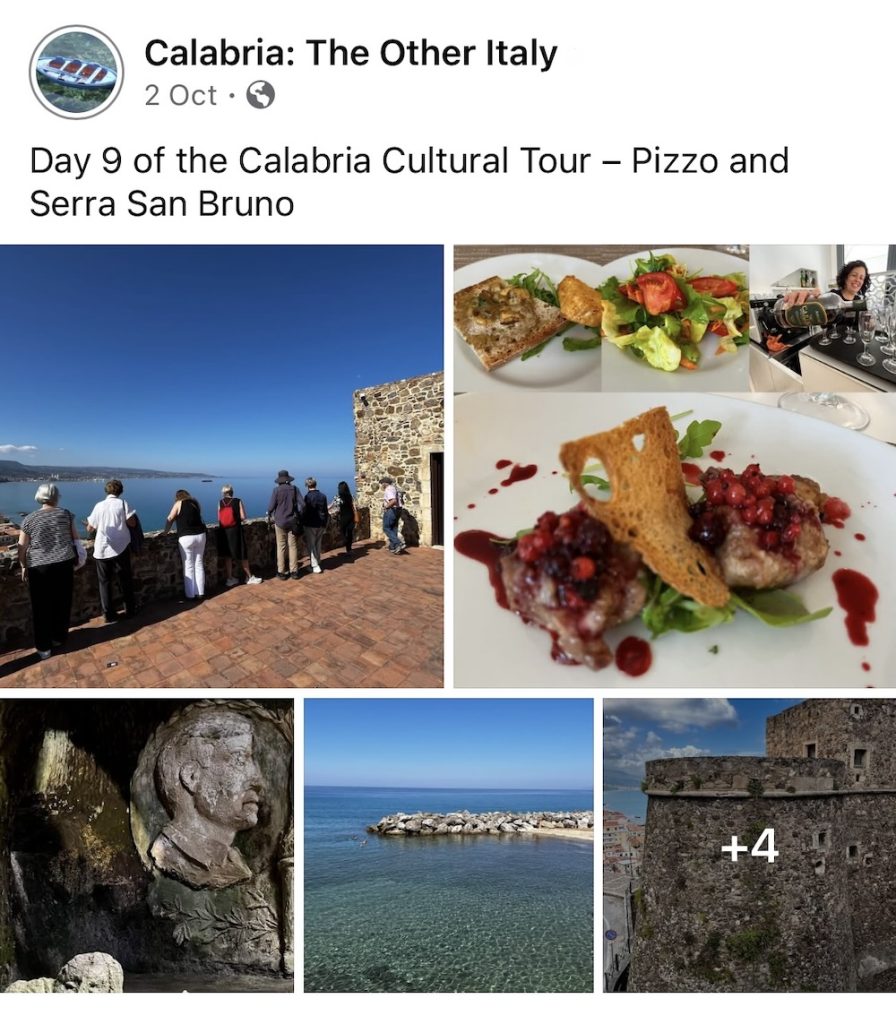
Tropea has become an iconic location, and we made our pilgrimage to this gorgeous village, yet another of Italy’s più belli and an excellent place to taste the famous ‘nduja from the nearby town of Spilinga. Then, back in Pizzo for our farewell dinner.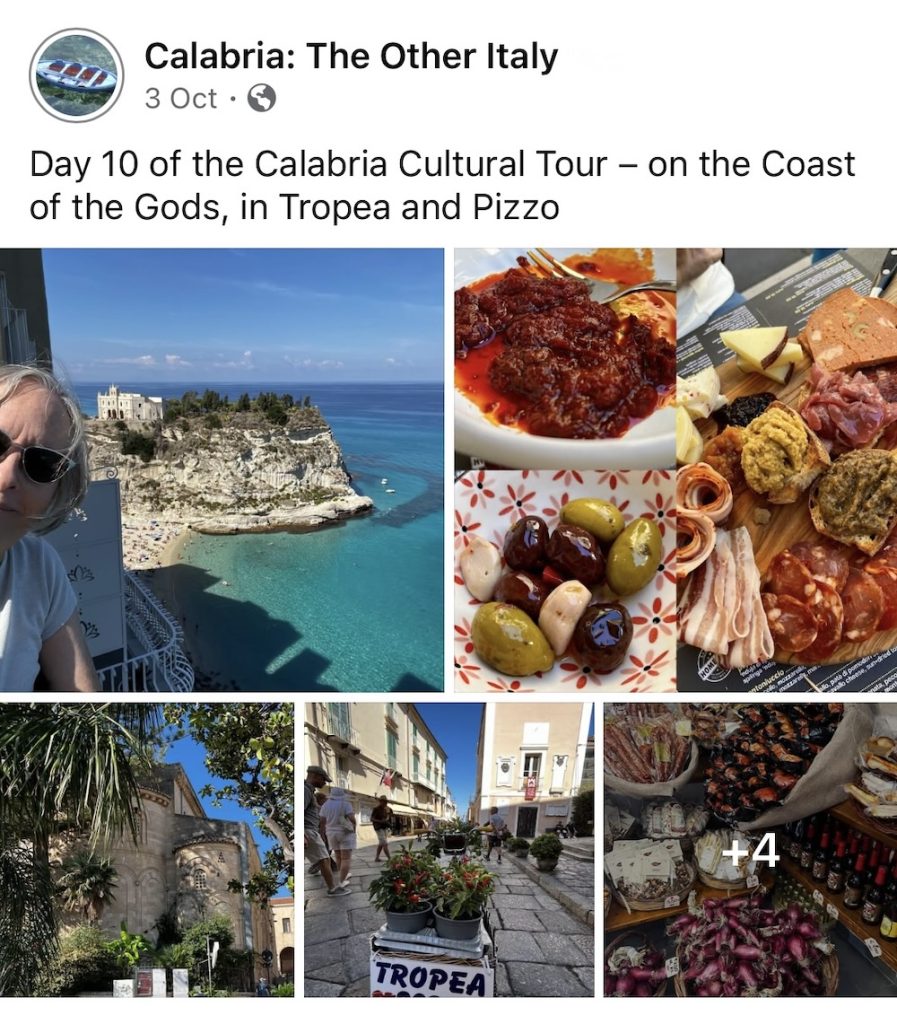
A final breakfast with a view of the Tyrrhenian Sea, a last goodbye to Calabria and the friends made. And a couple days to rest between my Calabria and Basilicata Cultural Tours.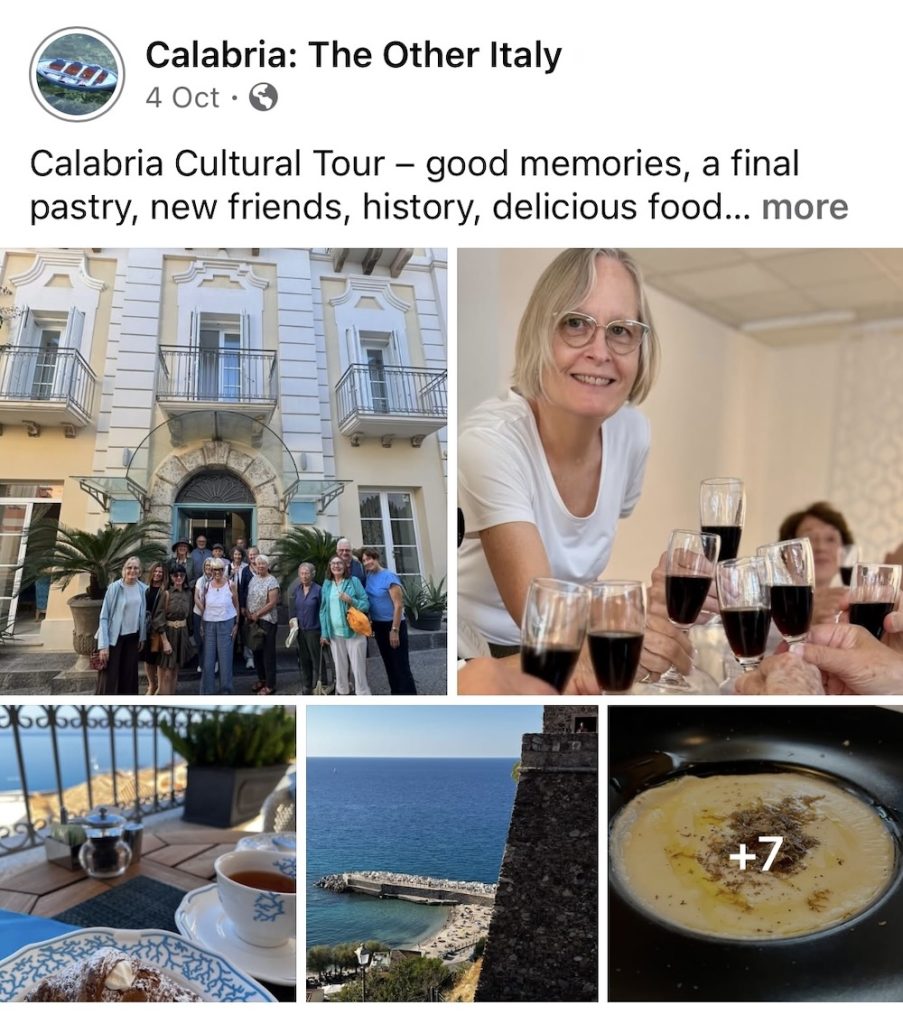
BASILICATA CULTURAL TOUR
My small-group Basilicata tour starts out in Bari (Puglia), as Basilicata doesn’t have an airport. We proceed directly to Melfi in the northern part of the region, where we stay for four nights. On our first afternoon, we had a guided tour of Melfi and visited the archeological museum in the town’s imposing castle. With dinner, we had our first taste of the region’s famous Aglianico del Vulture wine.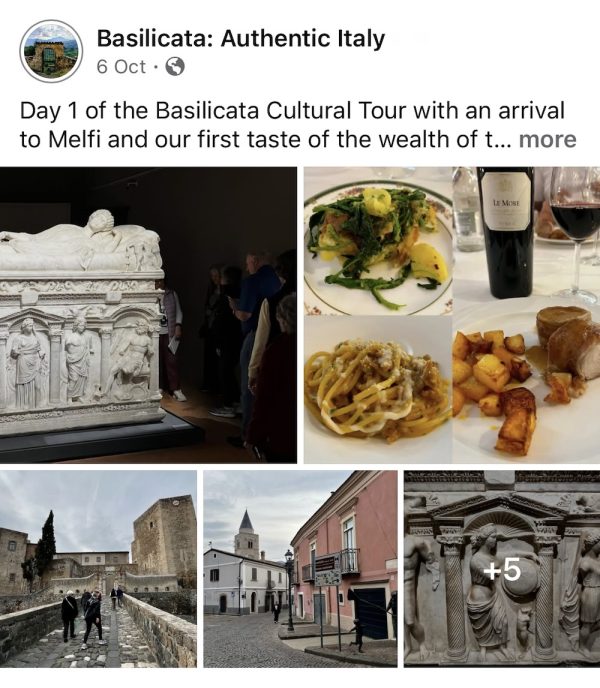
On the second day, we toured nearby Venosa, birthplace of Horace and one of Italy’s più belli! We then took a drive in the country, winding our way up the side and down into the “Vulture,” the spent volcano that characterizes this area of Basilicata. The lake in the photo is in the crater!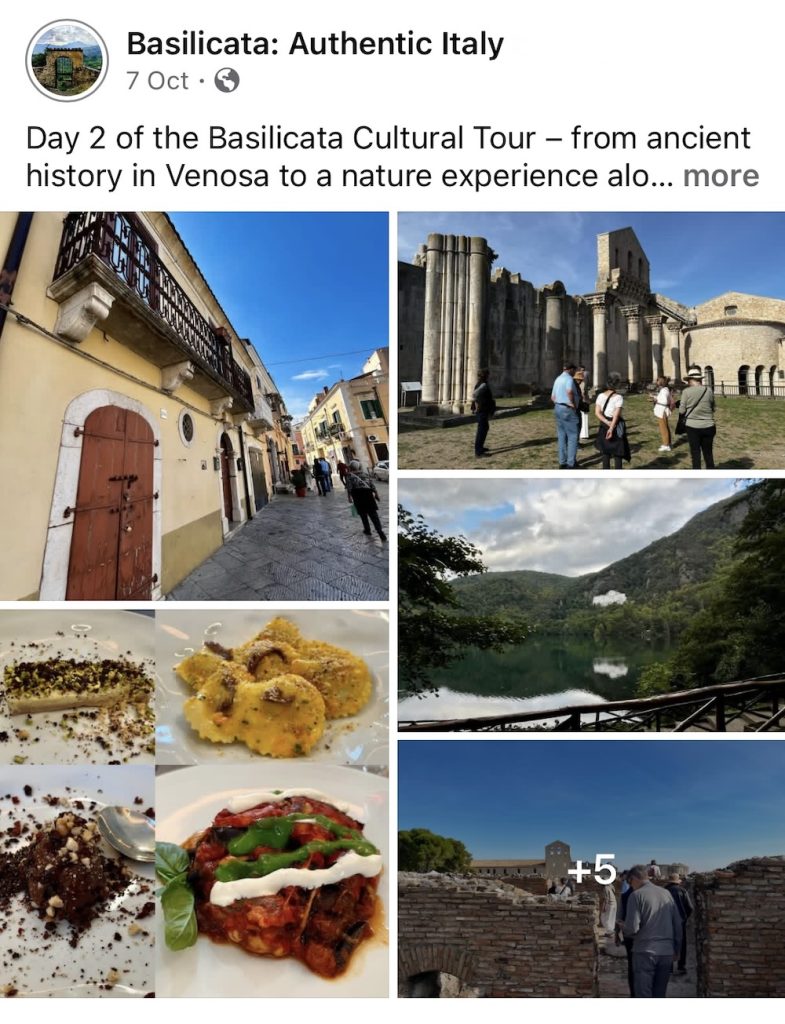
We had quite a varied program on the third day of this tour, from a richly frescoed church in Ripacandida to the wine grottos of Pietragalla (see blogpost, not amongst below images) to Lagopesole with a healthy, delicious lunch and Acerenza, another of the Borghi più belli d’Italia. The donkey is an image from the Emigration Museum in Lagopesole’s castle.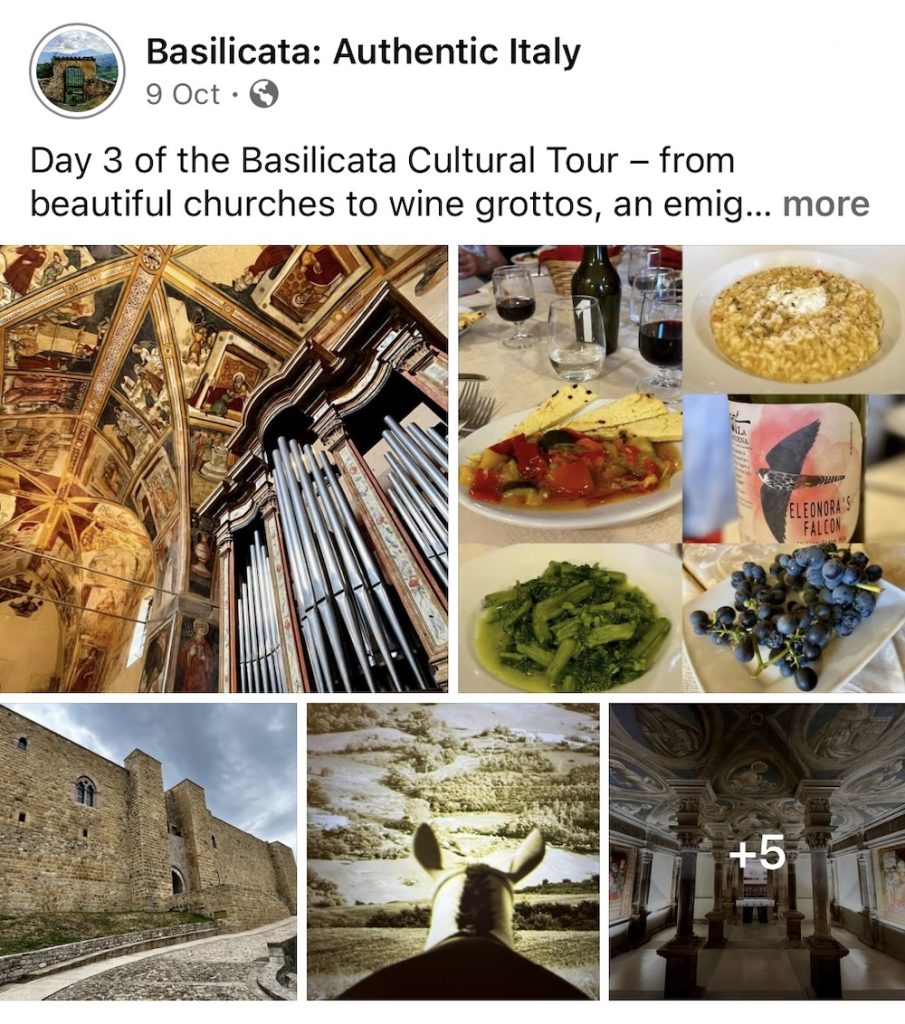
We visited Basilicata’s capital on day 4. That’s us riding Europe’s longest escalator up to the old town of Potenza, where we met lots of colorful characters on the streets as they were having a comic book festival that day. We also had an excellent wine tasting of the Aglianico del Vulture grape at an award-winning family winery.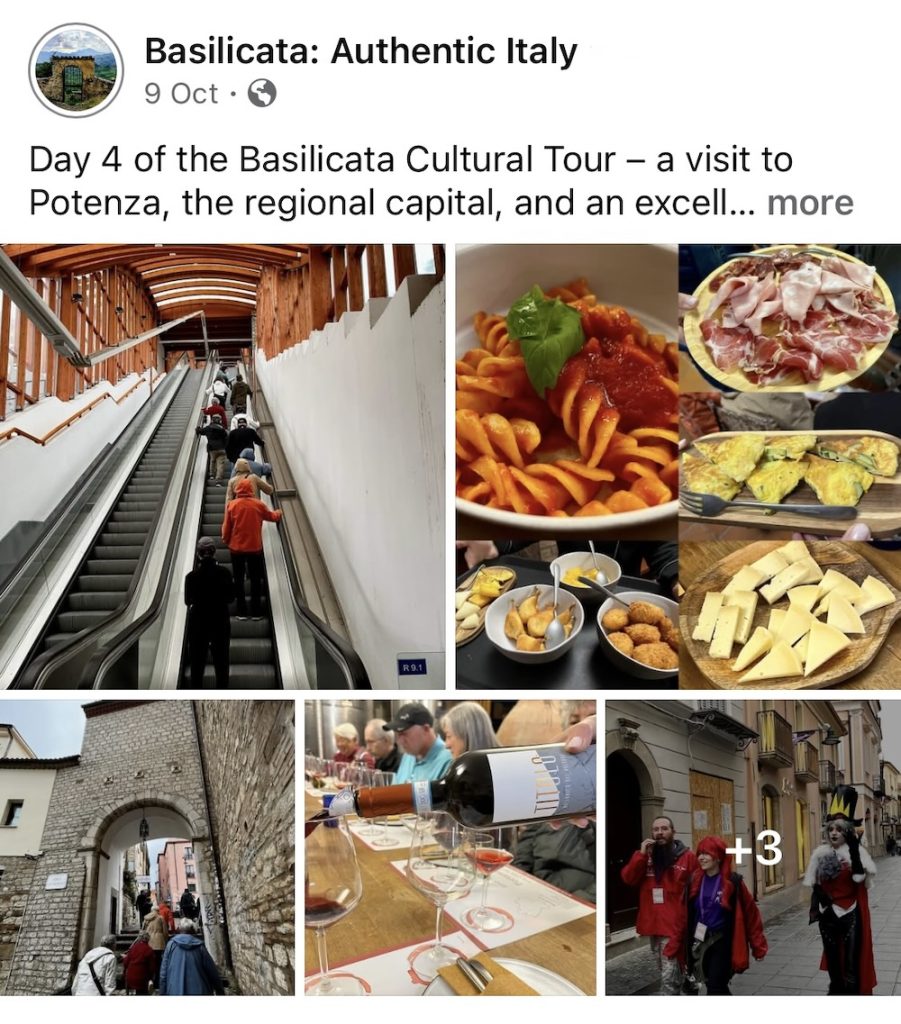
We took to the road on day 5, first visiting Castelmezzano, a stunning village nestled in the spikey rocks of the Lucanian Dolomites (another of Italy’s più belli!), where we enjoyed an exquisite meal in a Michelin-star restaurant. We then continued on to the western coast and to our hotel for two nights in Maratea.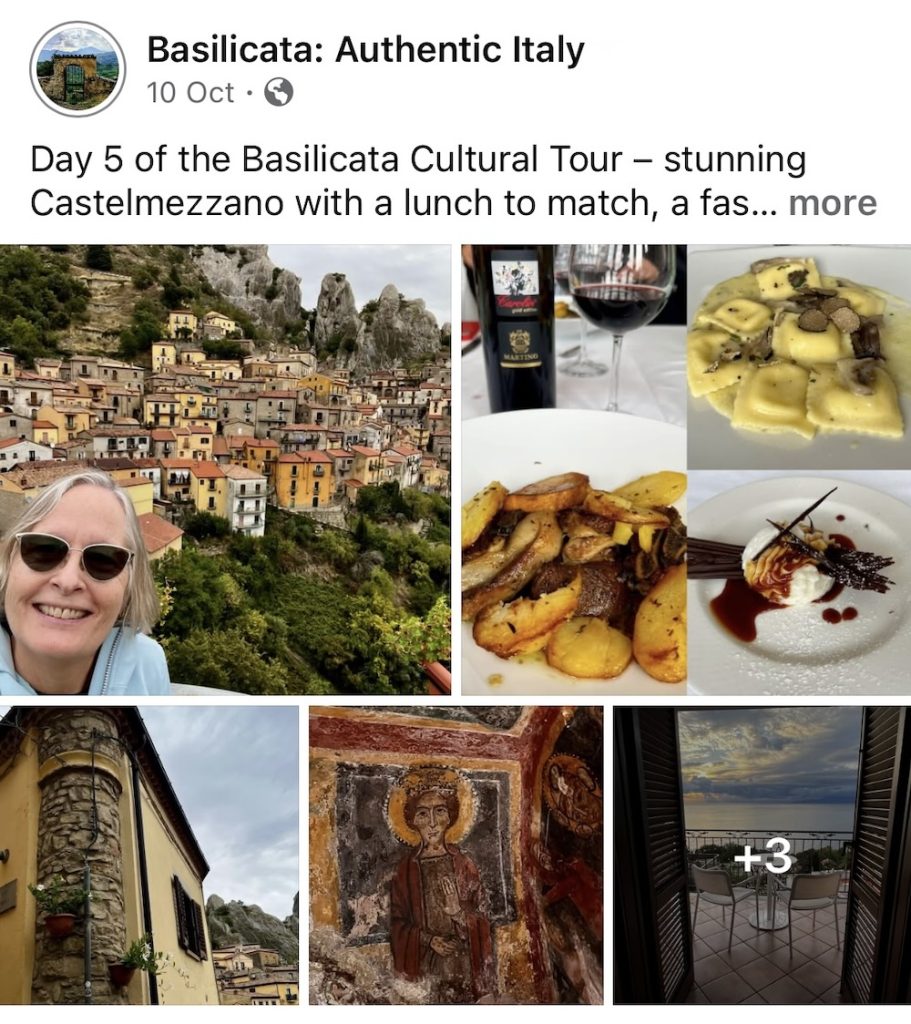
Day 6 gave us plenty of time to gaze at the sparkling Tyrrhenian Sea, from the Skywalk Maratea as well as from Mount Biagio under the outstretched arms of the Christ Redeemer statue. Seafood on the menu with views of the sea put smiles on our faces in this village, yet another of Italy’s più belli.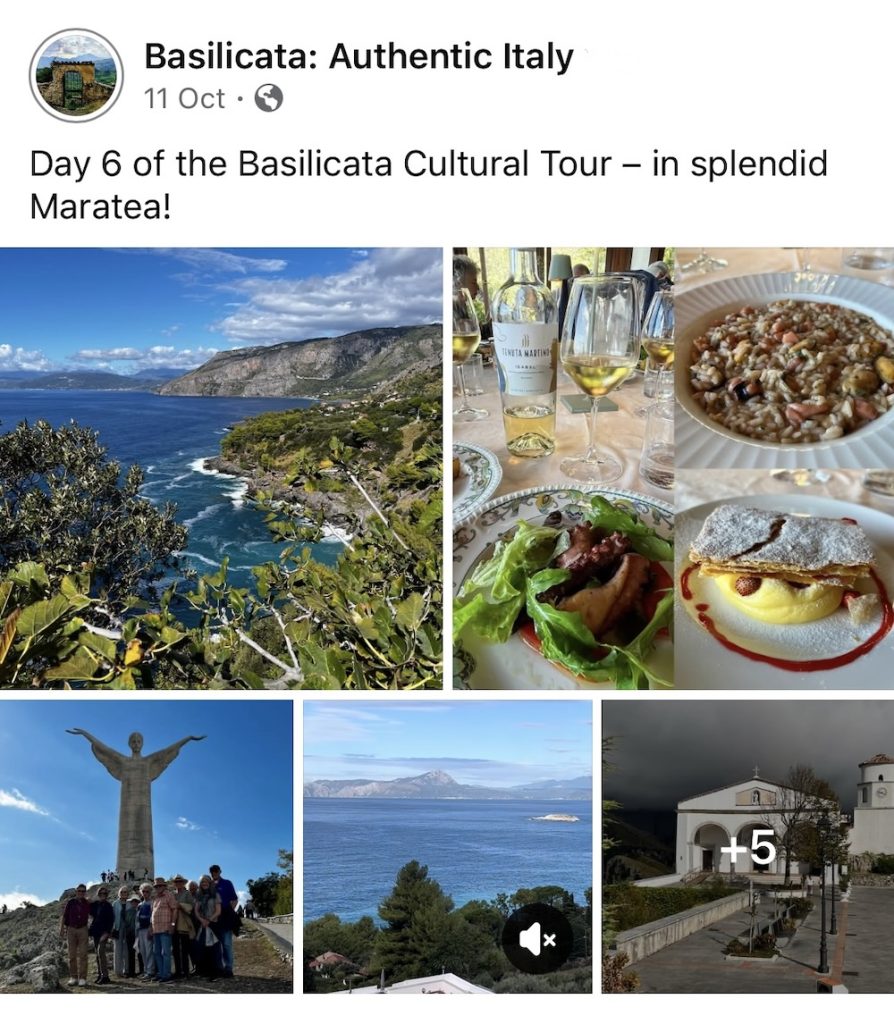
We drove from coast to coast on day 7 of the tour, from the western Tyrrhenian Sea through the Pollino Mountains to the Ionian Sea of Basilicata’s southeastern shoreline. We stopped in Rotonda, where we sampled, amongst a host of delicacies, the area’s red eggplant and the region’s signature food, the peperone crusco.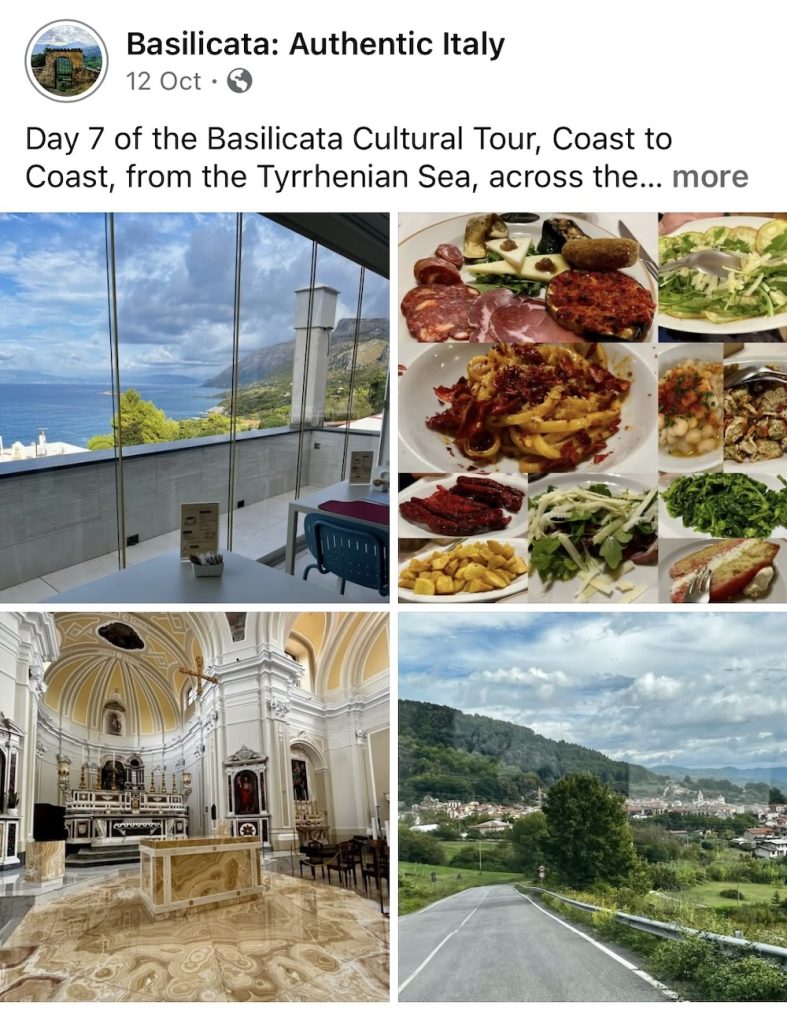
From our two-night base in Policoro, we visited Aliano, the village where Carlo Levi was banished and inspired to write his epic memoir Christ Stopped at Eboli, and Craco, a village that will never have the opportunity to be on the list of Italy’s most beautiful as it has ceased to exist, abandoned with a sadness and beauty of its own.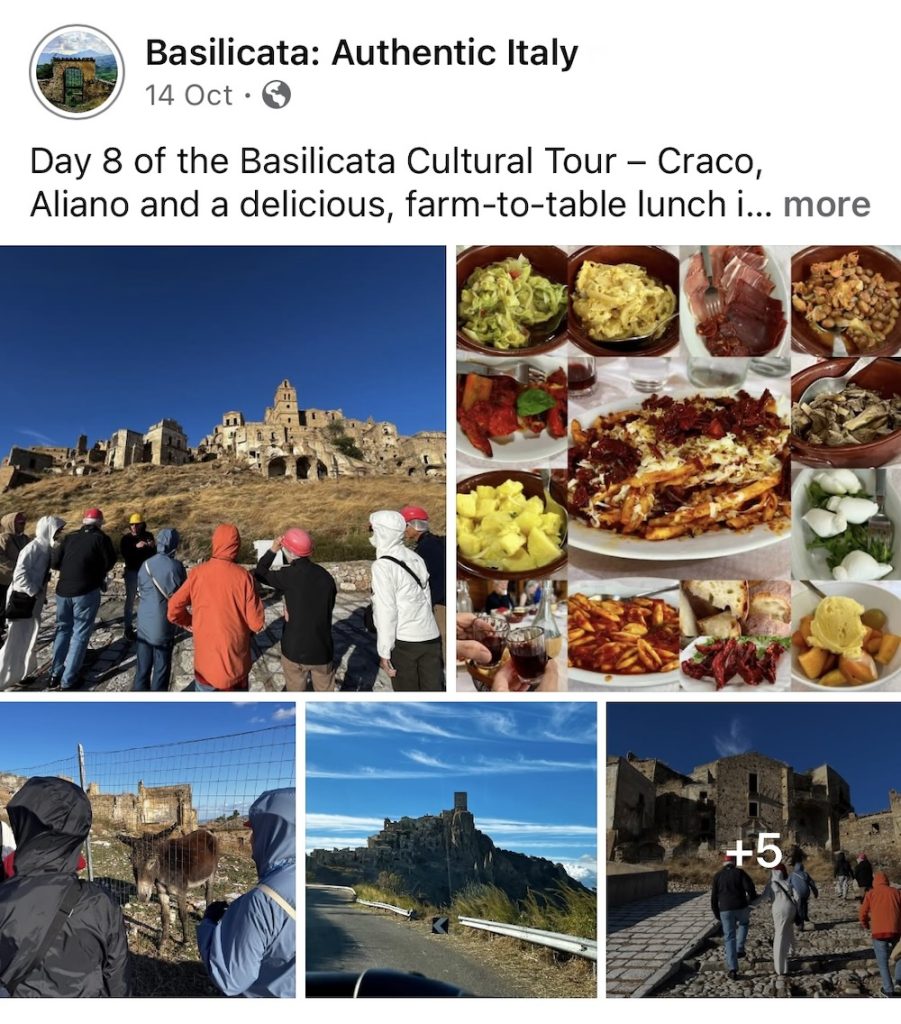
The history on day 9 ranged from Enotrian artifacts to a Greek temple to a Byzantine cave church. We had our first views of Matera, UNESCO World Heritage Site, and checked in to our final hotel for the last three nights of our tour.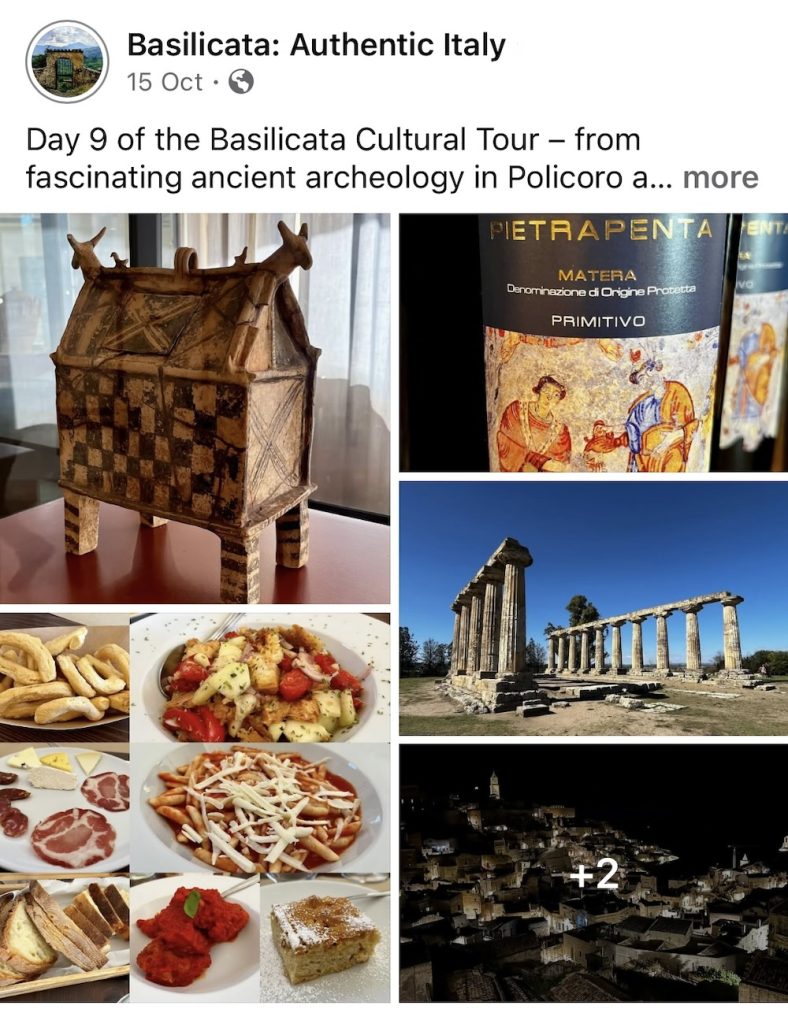
We dedicated our tenth day to exploring the Sassi di Matera, cave spaces that range from peasant houses to churches to an enormous cistern and a contemporary theater constructed in a more voluminous underground structure. For lunch, fava bean and chickery soup with mutton stew – comfort food of the local population.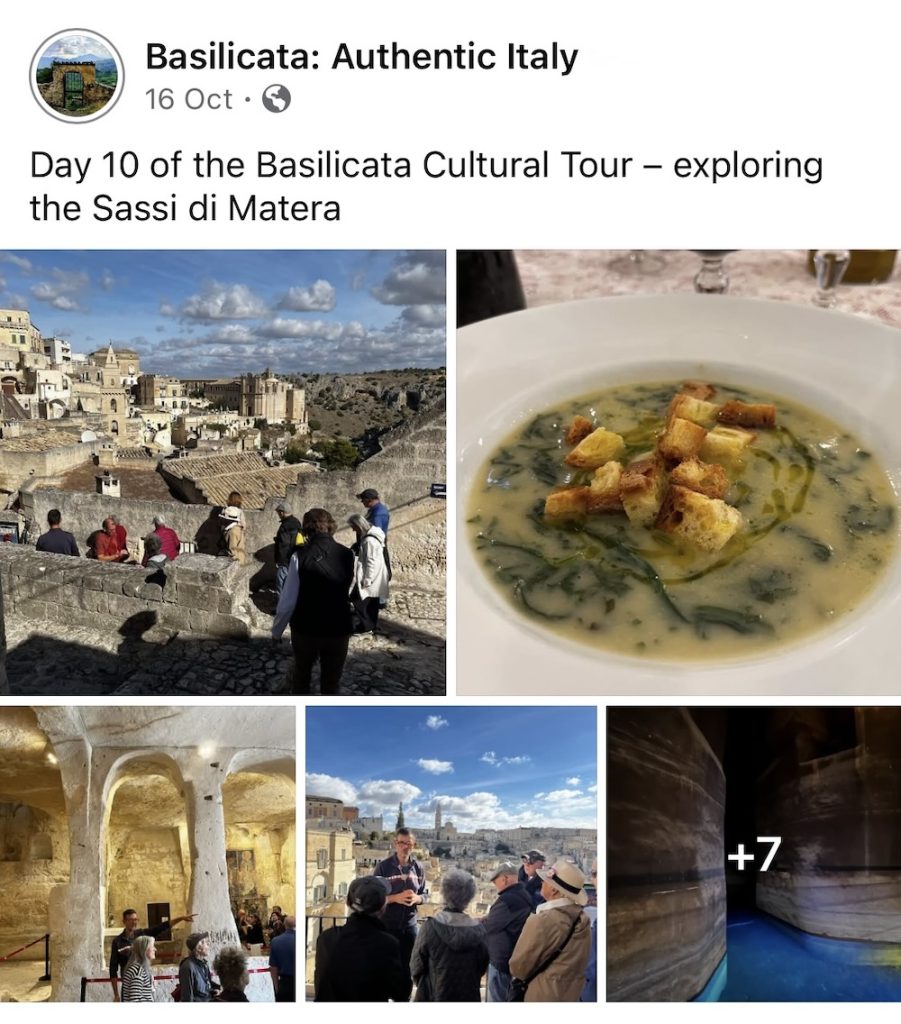
We had a windy day to visit the Murgia Materana Park across the ravine with a wonderful view back to the Sassi, although we almost lost a hat! We had time to wander and shop before our farewell dinner, a convivial meal of classic dishes.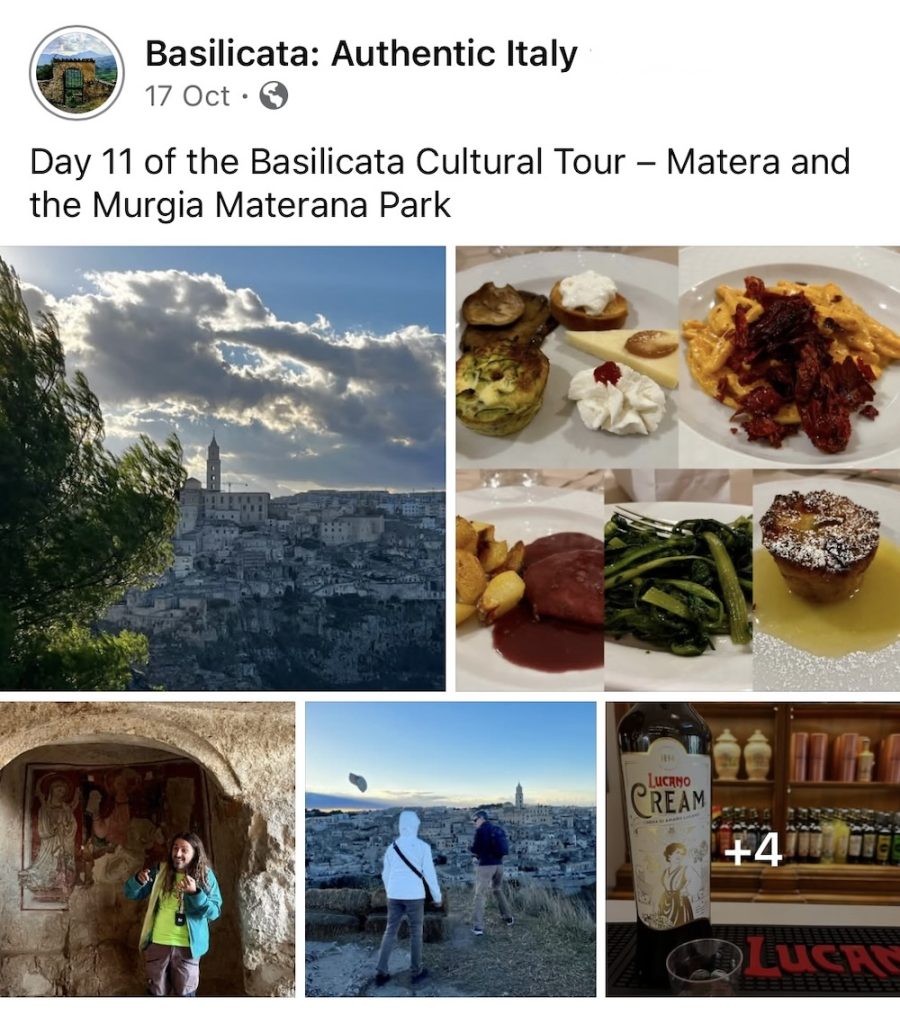
Arrivederci on our last day of the Basilicata Cultural Tour, with memories of an incredibly diverse region and all our warm encounters – until we meet again.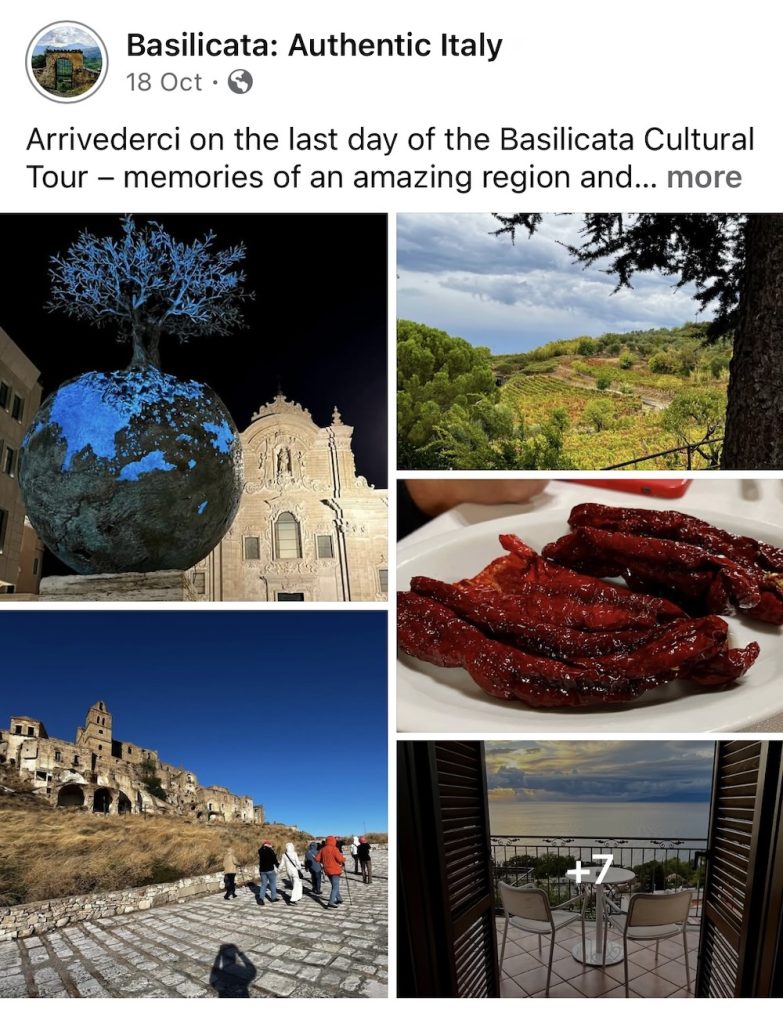
I hope you enjoyed these short descriptions and handful of photos of my small-group Calabria and Basilicata Cultural Tours. If you’d like more information or would like to join me for one or both, get in touch!
Detailed itineraries of the Calabria and Basilicata Cultural Tours:
Calabria Cultural Tour
Basilicata Cultural Tour
Read about the fascinating Calabrian region in my book Calabria: The Other Italy, described by Publisher’s Weekly as “an intoxicating blend of humor, joy, and reverence for this area in Italy’s deep south,” and explore Calabria’s northern neighbor in my book Basilicata: Authentic Italy,“recommended to readers who appreciate all things Italian” by the Library Journal.
